FDA Cold Box Rule Adds Cloud Traceability




On October 1, 2026, the practical impact of the FDA’s updated cold-chain transport guidance moves from policy text into export execution. The change centers on EPS pharma cold boxes used in pharmaceutical transport and requires FDA-recognized IoT temperature-control modules plus continuous cloud-based record retention for auditable data. For Chinese manufacturers shipping these products to the U.S., this is not only a product-specification issue but also a compliance, documentation, delivery, and after-sales traceability issue that can directly affect market access and order fulfillment.
What the updated guidance now requires
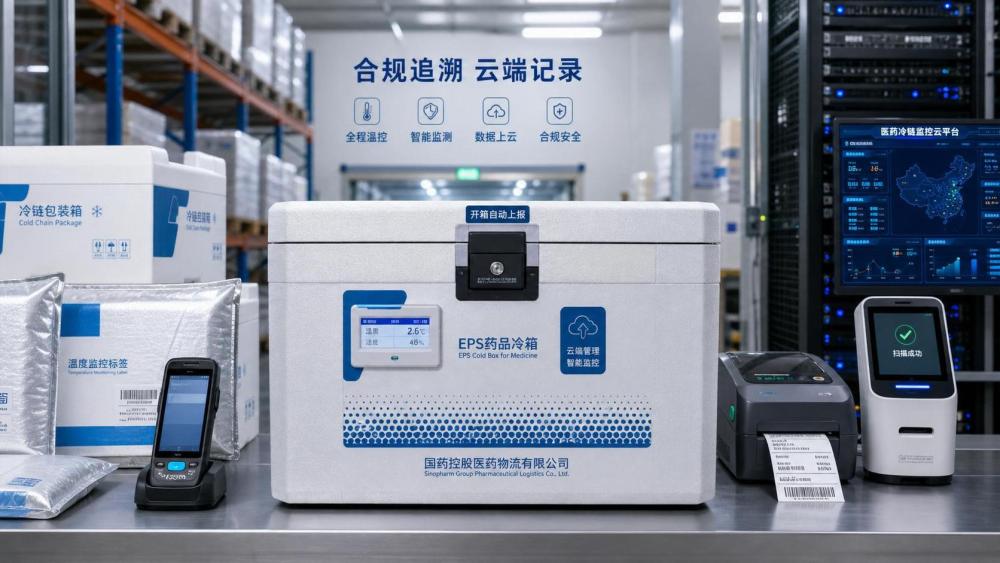
The confirmed facts are limited but clear. The FDA issued Pharmaceutical Cold Chain Transport Validation Guidance v3.1 on June 18, 2026. Under this update, EPS pharma cold boxes used for pharmaceutical transport must be equipped with an FDA-recognized IoT temperature-control module. The rule also requires full-parameter real-time upload of temperature, humidity, and box-opening events to an FDA-auditable cloud platform, with AWS GovCloud and Azure US Government cited as examples. The required storage period is no less than five years. The rule applies to Chinese manufacturers exporting pharmaceutical cold boxes to the U.S., takes effect on October 1, 2026, and provides only a three-month transition period.
Where the compliance pressure is likely to appear first
Export manufacturers face a product-plus-data requirement
From an industry perspective, manufacturers are likely to be affected first because the rule does not stop at box performance alone. The requirement links physical packaging, IoT hardware selection, and cloud data retention into one compliance chain. What deserves closer attention is whether product specifications, validation materials, and delivery documents can consistently reflect the use of an FDA-recognized module and the ability to support auditable cloud storage for the required period.
Procurement teams may need to revisit supplier qualification
For buyers and sourcing teams, the change may shift attention from unit cost and insulation performance alone to module recognition status, data upload capability, and long-term record management. Analysis shows that supplier review, technical requirement alignment, and purchase documentation may become more detailed where U.S.-bound pharmaceutical cold boxes are involved.
Supply chain and delivery services may see new documentation expectations
Observably, logistics and delivery-related participants may need to coordinate more closely around data continuity. If temperature, humidity, and opening events must be uploaded in real time and retained for five years, then handover records, validation-related files, and post-delivery traceability materials could receive greater scrutiny during execution, even though the input information does not provide a detailed enforcement workflow.
Testing, certification, and compliance support functions may become more involved
Companies that support validation, compliance review, or technical documentation may also be affected because the rule introduces a more explicit connection between transport validation and digital evidence retention. It is more appropriate to understand this as a signal that supporting materials may need to cover both cold-chain performance and data architecture readiness, rather than performance testing alone.
What companies should review now
Check whether current product configurations match the new threshold
Companies exporting to the U.S. should first review whether existing EPS pharma cold box configurations already include an FDA-recognized IoT temperature-control module. If not, the compliance gap may affect quotations, order acceptance, and shipment planning after the effective date.
Re-examine technical files and traceability records
Analysis shows that technical documents should be checked for consistency with the updated guidance, especially where product specifications, validation descriptions, and traceability records relate to temperature, humidity, box-opening events, and cloud retention arrangements. The input does not provide a detailed filing template, so this remains an area for continued attention rather than a concluded requirement set.
Assess delivery timing under the short transition window
The three-month transition period is brief. From an industry perspective, companies may need to review whether products already in production, pending export orders, or ongoing customer negotiations could be affected by the implementation date. The key practical issue is less about abstract policy interpretation and more about whether shipments and supporting records can match the new rule on time.
Watch for how execution language appears in customer documents
What deserves closer attention is how the updated requirement may be reflected in purchase specifications, qualification reviews, bid documents, or acceptance criteria. The current information confirms the rule change itself, but not the full downstream wording that customers, auditors, or counterparties may adopt in day-to-day transactions.
Why this reads as an execution signal, not just a guidance update
Analysis shows that this development is better read as a concrete compliance signal for market access than as a purely technical revision. The rule sets a defined effective date, identifies required monitoring elements, points to auditable government cloud environments, and sets a minimum retention period. At the same time, observably, the market still needs to watch how certification language, customer-side acceptance standards, and implementation practices develop in response to the new requirement.
How the market may need to interpret this change
A cautious reading is more appropriate here. The update already represents a landed rule change for Chinese manufacturers exporting pharmaceutical cold boxes to the U.S., because the effective date and core obligations are clearly stated in the provided information. However, the full commercial impact will still depend on how buyers, compliance reviewers, and service providers translate those obligations into qualification checks, technical files, and delivery controls. In that sense, this is both an implemented requirement and a rule development that still warrants close monitoring in execution.
Basis of this article and items still requiring verification
This article is generated based on the user-provided title, event date, and event summary. For developments of this type, relevant source categories usually include official regulatory releases, notices from supervisory authorities, trade or customs-related information, industry association updates, standards documents, and reporting from authoritative media. A specific official source link was not provided in the input, so that point still requires ongoing verification. It also remains necessary to monitor later details such as implementation wording, certification and compliance interpretation, procurement document updates, market feedback, and how affected companies actually execute the new requirement.
Related News
- 00
0000-00
How to prevent temperature excursions in pharma warehouse cold storage - 00
0000-00
When does a CO2 refrigeration system UK project pay back on energy? - 00
0000-00
How refrigeration payback analysis reveals the true cost of cold room upgrades - 00
0000-00
How cold storage operations management can reduce temperature excursions - 00
0000-00
How reefer container chillers protect seafood quality during export
Logistics Thermal Strategist
Weekly Insights
Stay ahead with our curated technology reports delivered every Monday.