
PSA Launches Cold-Chain Pre-Clearance Rule




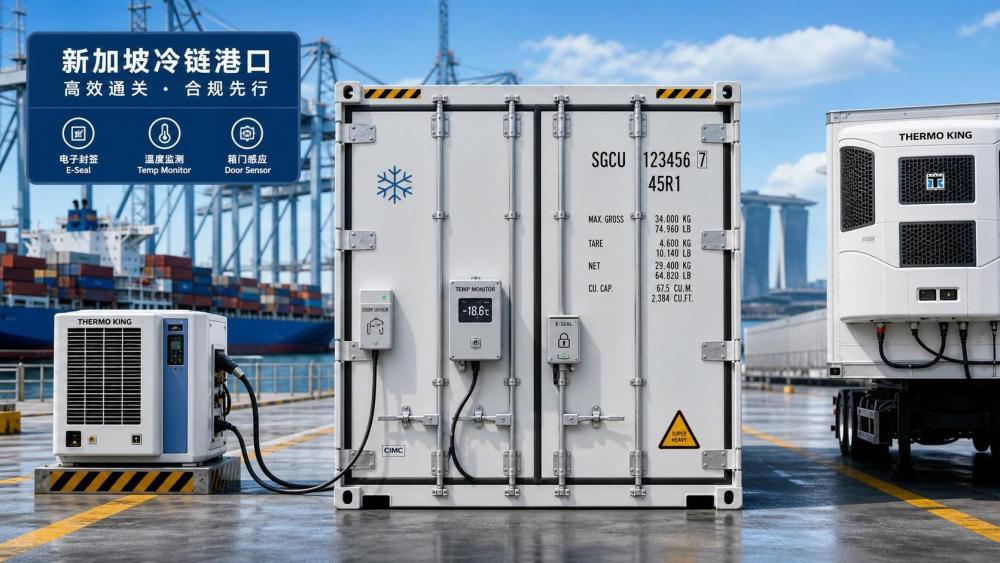
PSA began operating its ColdChainPreClear platform at 00:00 on July 1, 2026, introducing a new compliance threshold for refrigerated cargo moving through or into Singapore. The update matters to companies handling reefer logistics, equipment integration, customs-facing operations, and time-sensitive cargo because Reefer Container Chillers and Truck Refrigeration Units now need a pre-integrated electronic seal communication interface aligned with ISO 17712:2023, while non-adapted equipment may face a high-risk inspection flag and clearance delays exceeding 72 hours on average.
What the New PSA Requirement Confirms
According to the provided event information, PSA officially launched the ColdChainPreClear platform on July 1, 2026. The requirement applies to refrigerated container temperature-control equipment involved in transshipment or import flows through Singapore, including Reefer Container Chillers and Truck Refrigeration Units.
The stated compliance condition is that these devices must be pre-integrated with an electronic seal communication interface that meets ISO 17712:2023. They must also support the on-chain transmission of two types of real-time data: temperature status and door-access status.
The provided information also states that equipment that is not adapted to this requirement will be automatically marked by the system as a high-risk inspection target, with average customs clearance delays extending beyond 72 hours.
Where the Operational Impact Is Likely to Appear
For cargo owners and traders moving temperature-sensitive goods
From an industry perspective, the main exposure for cargo owners and trading companies is transit reliability. If refrigerated equipment used in Singapore-bound or Singapore-transiting flows does not meet the stated interface requirement, the risk is not described as a general inconvenience but as a system-based inspection trigger. That means the practical concern is shipment timing, especially where cargo plans depend on predictable handover and release windows.
What deserves closer attention is whether the equipment assigned to a shipment already supports the required interface and whether shipment planning needs to account for the possibility of extended clearance time when non-adapted assets are used.
For logistics providers managing reefer operations
Observably, freight forwarders, cold-chain operators, and other supply chain service providers may be affected at the equipment allocation and execution level. The requirement is tied not only to container refrigeration but also to supporting units such as Truck Refrigeration Units, which suggests the operational checkpoint may extend across more than one stage of the cold-chain movement.
The immediate business issue is coordination: service providers may need to verify device compatibility before routing cargo through Singapore, while also preparing for exception handling when equipment is flagged by the platform.
For equipment suppliers and technical service partners
Analysis shows that suppliers of refrigerated temperature-control equipment and related integration services may be drawn into customer compliance work. The requirement is framed around pre-integration, a standards-based electronic seal interface, and dual real-time data reporting. That places attention on whether current products or installed devices can meet the communication and data-output conditions described in the PSA update.
For this group, the impact is likely to appear in product readiness checks, retrofit discussions, interface validation, and customer-facing documentation rather than in abstract policy monitoring.
What Companies Should Check Now
Confirm which equipment falls within the requirement
The first practical step is to identify whether current Singapore-related cold-chain flows use Reefer Container Chillers, Truck Refrigeration Units, or both. The relevance of this rule depends on actual equipment deployment, so companies should distinguish between cargo exposure and equipment exposure rather than assuming all cold-chain movements are affected in the same way.
Separate interface compliance from general cold-chain capability
The PSA requirement is not described simply as a refrigeration performance issue. It specifically refers to a compliant electronic seal communication interface and to real-time temperature and door-status data being recorded on-chain. Companies should therefore avoid treating ordinary cooling performance, standard telemetry, and this interface requirement as interchangeable.
Prepare for documentation and customer communication pressure
Where shipments rely on Singapore for import or transshipment, counterparties may start asking for clearer proof of equipment readiness. Analysis shows that operations, procurement, and customer service teams may need a more precise internal record of which assets are adapted, which are pending, and which routes carry elevated delay risk if non-adapted equipment is used.
Watch for further clarification in implementation language
What deserves closer attention is the difference between the confirmed launch requirement and any later operational clarifications that may shape how the platform is applied in practice. Businesses should continue tracking how PSA or related official channels describe compliance details, inspection handling, and any refinements to the platform's operating rules.
Why This Looks Like More Than a One-Day Procedural Change
Observably, this update can be read as more than a short-term port operations notice because it links equipment compatibility, electronic sealing, and live condition reporting to customs treatment. That does not by itself prove a broad market shift beyond the provided facts, but it does indicate that technical readiness at the equipment layer is being connected directly to cargo processing outcomes.
It is more appropriate to understand this as an operational compliance signal with immediate consequences rather than as a purely symbolic digitalization move. At the same time, analysis should remain cautious: the provided information confirms the requirement and the stated delay consequence, but broader adoption patterns and downstream market responses still require continued observation.
How to Read the Development at This Stage
At this stage, the most balanced interpretation is that PSA has put a concrete gatekeeping mechanism into cold-chain handling for Singapore-related reefer flows. The confirmed facts point to a near-term compliance issue for affected equipment and a potentially material scheduling issue for non-adapted assets.
From an industry perspective, this is best understood as a live operational requirement with longer-term implications still unfolding. It is not just a background policy signal, but it is also too early to draw wider conclusions beyond the compliance, routing, and equipment-readiness questions already visible in the announced rule.
Basis of This Article and What Still Needs Verification
This article is based on the user-provided news title, event date, and event summary. For reporting of this type, relevant source categories would usually include official port or operator notices, company announcements, industry association updates, authoritative media coverage, and standard-setting organization documents.
No specific official source link was provided in the input, so the exact underlying publication and any subsequent clarification still need ongoing verification. Follow-up attention should focus on whether additional official wording further defines implementation details, compliance interpretation, or procedural handling for affected cold-chain equipment.
Related News
- 00
0000-00
What cold room specifications matter when exporting to Vietnam? - 00
0000-00
How to evaluate a prefabricated cold storage manufacturer before ordering - 00
0000-00
How to verify cold chain compliance for seafood during delivery - 00
0000-00
When heat recovery systems for process cooling deliver a viable energy ROI - 00
0000-00
When heat recovery systems for refrigeration pay back in cold storage
Logistics Thermal Strategist
Weekly Insights
Stay ahead with our curated technology reports delivered every Monday.