
India Tightens BIS Rules for Reefer Chillers




On June 16, 2026, the Bureau of Indian Standards (BIS) updated its mandatory certification list for imported reefer container chillers, setting a clearer compliance threshold ahead of October 1, 2026. For exporters, manufacturers, importers, and supply chain teams serving the Indian market, the update matters because market access will depend on meeting both energy-efficiency and low-GWP requirements under IS 17812:2026, with customs detention and a sales ban applying to uncertified products.
What the BIS update now requires
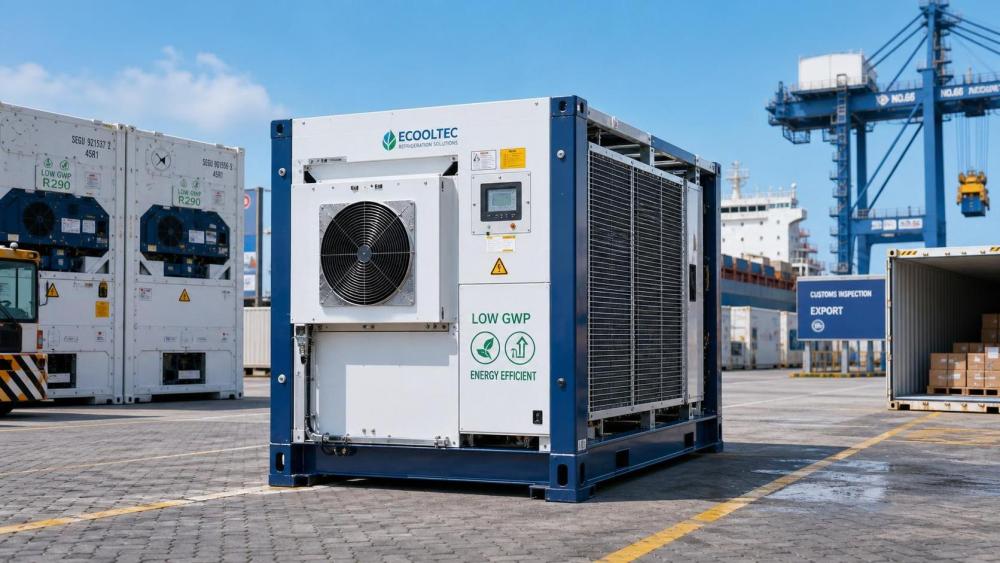
According to the information provided, BIS updated the mandatory certification list on June 16 and specified that, from October 1, 2026, all imported reefer container chillers must comply with two requirements under IS 17812:2026 at the same time. The first is an annual energy efficiency ratio of AEER ≥ 3.2. The second is a refrigerant GWP value of ≤ 750.
The same information states that products without the required certification will be detained by customs and barred from sale. It also confirms that the standard covers systems using CO₂, R290, and A2L blended refrigerants.
Where the pressure will be felt first
Export-oriented manufacturers face immediate product qualification pressure
From an industry perspective, manufacturers shipping reefer container chillers to India are likely to be affected first because the rule is tied directly to import clearance and sales eligibility. The main business impact is likely to appear in product design validation, refrigerant selection, certification preparation, and shipment planning for India-bound models.
Traders and importers need to reassess shipment readiness
Direct trade companies and import-side operators may be affected at the border-compliance stage. Analysis shows that the risk is not limited to product performance alone; it also extends to whether goods can enter the market at all once the deadline arrives. What deserves closer attention is the alignment between product certification status and shipping schedules for orders targeting India.
Supply chain and service partners may see document and coordination risk rise
Supply chain service providers, including teams handling documentation, customs coordination, and delivery scheduling, may be affected because uncertified products are explicitly exposed to customs detention. Observably, the operational pressure may center on documentation completeness, model traceability, and communication between manufacturers, exporters, and import-side partners.
What companies should track from now on
Separate confirmed rules from later implementation details
Analysis shows that the confirmed points are the effective date, the dual thresholds under IS 17812:2026, the customs detention risk, and the sales prohibition for uncertified products. Companies should keep those facts separate from any later interpretation, procedural detail, or market assumption that may emerge after the announcement.
Review which product lines are exposed to the India market
What deserves closer attention is whether current reefer container chiller models for India can satisfy both AEER and GWP conditions together. The practical issue is not only technical compliance in isolation, but whether existing export models, refrigerant pathways, and certification timing remain compatible with the October 1, 2026 requirement.
Prepare certification and shipping documents in parallel
For firms already serving Indian buyers, the compliance task is likely to extend beyond engineering changes. Observably, certification status, product documentation, and customs-facing paperwork may need to move in parallel to reduce the risk of shipment disruption once enforcement begins.
Strengthen communication with buyers and suppliers
From an industry perspective, companies should pay close attention to supplier qualification, lead times tied to technical switching, and customer communication around compliant models. This is especially relevant where product specifications, refrigerant choices, or delivery schedules may need to be adjusted for India-bound business.
Why this looks like more than a short-term notice
Analysis shows that this update is not merely a routine administrative adjustment. By combining an AEER threshold with a refrigerant GWP cap in the same mandatory framework, the rule sends a clearer compliance signal to companies that want to stay active in the Indian market for reefer container chillers.
It is more appropriate to understand this as both an immediate market-access requirement and a longer-term regulatory signal. The immediate element is straightforward: uncertified imported products face detention and cannot be sold. The longer-term element, based on the provided information, is that exporters are being pushed to accelerate technical switching, especially around compliant system and refrigerant choices.
How this update is best understood now
At this stage, the most balanced reading is that the BIS move creates a defined compliance checkpoint for imported reefer container chillers rather than a fully knowable market outcome. The confirmed impact is the dual-certification requirement from October 1, 2026. The broader commercial effect on product portfolios, supply arrangements, and order execution still needs to be observed through actual implementation and company responses.
About the basis of this article
This article is generated from the user-provided news title, event date, and event summary related to the BIS update on imported reefer container chillers. For this type of industry development, commonly relevant source categories may include official notices, company announcements, industry association updates, authoritative media coverage, and standard-setting documents.
No specific official source link was provided in the input, so the exact official document path still requires ongoing verification. Further follow-up should focus on any additional official wording, implementation details, and market-facing compliance guidance connected to IS 17812:2026.
Related News
- 00
0000-00
How refrigeration payback analysis reveals the true cost of cold room upgrades - 00
0000-00
How cold storage operations management can reduce temperature excursions - 00
0000-00
How reefer container chillers protect seafood quality during export - 00
0000-00
How to validate temperature monitoring in a pharmaceutical cold chain system - 00
0000-00
What drives natural refrigerant cost over a system’s lifetime?
Logistics Thermal Strategist
Weekly Insights
Stay ahead with our curated technology reports delivered every Monday.